

Deep Cuts #1: Love Is Overtaking Me - Arthur Russell
This is the first instalment of Deep Cuts, a new series focusing on artists who may have gone under the radar, but left behind records worth returning to.
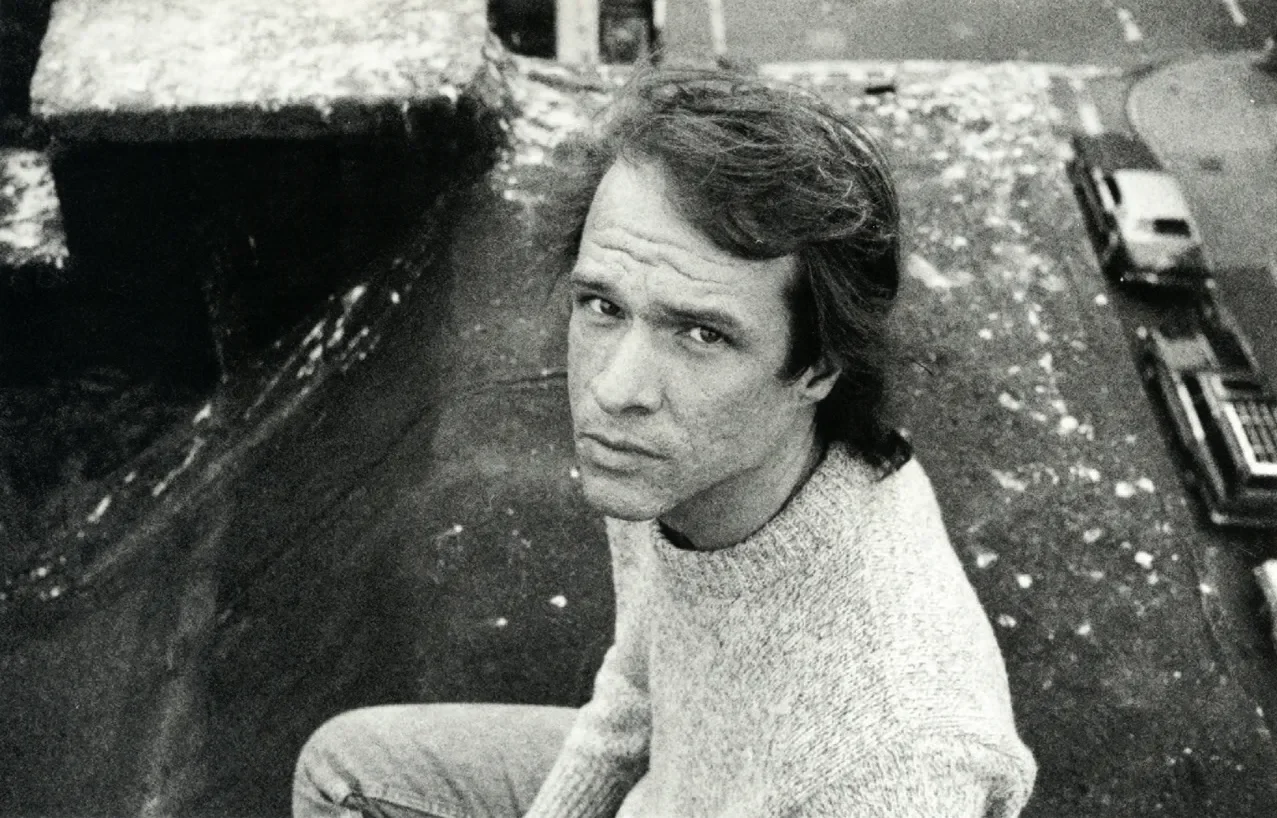
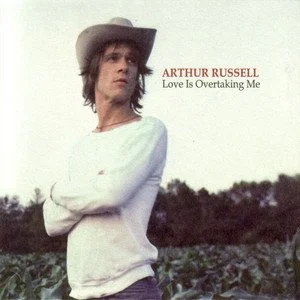
I do not remember the exact moment I first heard Arthur Russell, but I do remember the first song. It was ‘I Couldn’t Say It To Your Face’, the melody is simple, arrangement barely there, yet it lands in a way which feels oddly permanent. That tends to be how artists like Russell enter your life.
An acne-ridden kid from the cornfields of Iowa, Arthur Russell was a long way from the New York world he would later drift into. He moved first to San Francisco, then to New York in the early 70s, where things would start to blur into something harder to define. He worked at The Kitchen, an experimental music performance space in lower Manhattan that became a hub for avant-garde music, video art and interdisciplinary work. Alongside this he studied composition, played cello, made disco records, wrote folk songs, and moved between scenes in a way which feels almost impossible now.
Through projects like Dinosaur L and Loose Joints, he was also making some of the most forward-thinking dance music of the era. Tracks like ‘Kiss Me Again’ and ‘Tell You (Today)’ feel worlds away from the hushed folk of Love Is Overtaking Me, but they come from the same instinct. Russell was not interested in picking a lane.
There are many stories that help to sketch him out, although unable to define him. One of the more well known is his relationship with poet Allen Ginsburg, which began as a brief romantic involvement and became a longer creative connection. It says something about that he could comfortably exist in that world, around poets, authors and composers, while also writing songs which feel so grounded and emotionally direct.
In 1976, Russell was briefly in talks to join Talking Heads as they were expanding beyond a trio. He never joined, but worked on early arrangements and recordings, including an acoustic version of Psycho Killer with his cello threaded through it. As David Byrne later put it, working with Russell made him ‘reorient’ how he thought about music.
He recorded constantly, but rarely finished things in the traditional sense. He would rework songs, strip them back, rebuild them, then move on again. There are not many clear ‘final versions’ in the Arthur Russell songbook, more so different stages of the same idea.
Russell died in 1992 from AIDS-related illness, still relatively unknown compared to the reputation he would later gain. That reputation has only grown over time, as reissues and archival releases have revealed just how much work he left behind. I think it’s important not to flatten him into a ‘lost genius’ status as the work has always been there, it just took people time to catch up.
Love Is Overtaking Me, released in 2008, sixteen years after his death, is one of the clearest ways into that world. It collects material recorded across different periods, focusing on his songwriting rather than more experimental jazzy disco style he had become increasingly known for. The songs are small, light arrangements, acoustic guitars and melodies which feel almost offhand. Russel’s voice sits right at the centre of these folksy miniatures, soft and slightly unsteady. There is very little of the more outward experimentation he is often associated with.
For an artist whose catalogue can feel abstract or difficult to pin down, this record feels unusually direct. Across its 21 tracks, it rarely loses your attention, which is impressive for something that never really strays far from Russell and his guitar. The recordings can be a little rough in places, pulled from tapes which were never meant to be final, but it adds to the charm.
‘Close My Eyes’, is one of Russel’s most recognisable songs, but it was never released in his lifetime. The song is built around a steady, unassuming guitar line with Russel’s voice sitting gently over the top. There is a quietness to it that feels fragile, carrying the tone of old country records, something closer to John Prine or Townes Van Zandt than anything happening in New York.
“Will the corn be growing a little tonight,
As I wait in the fields for you?”
Russell had been living in New York and San Francisco, but this feels rooted in the Midwest entirely. He doesn’t frame this place as something dull and empty, but expansive. Warm air, open fields, time moving slowly. These songs can be seen as a love letter to his roots in Iowa.
This sense of place runs through the whole record. Love, distance and memory all tied to something physical. Not in a grand, cinematic way but in small, almost passing details. It’s music that lingers; gives you space to sit with and gradually starts to feel personal.
And that’s probably why Love Is Overtaking Me works so well as a starting point. If you’re not familiar with Arthur Russell, this is the place to begin. It strips everything back to the core of what he does best. The songwriting, the feeling, the sense that even the smallest ideas are worth holding onto.
It’s not the most definitive version of him, but it’s the most immediate. You don’t need to understand the wider catalogue, or the context, or the mythology around his work. You can just press play and let it unfold.
And if it lands, even slightly, you’ll find yourself coming back to it.